Foundation Medicine, the US precision medicine company that operates as an independent subsidiary of Roche, agreed on April 16, 2026 to acquire SAGA Diagnostics, the maker of a blood test that looks for traces of cancer left behind after treatment. The deal is worth up to $595 million, a figure that includes commercial and regulatory milestone payments. The upfront portion was not disclosed.
The transaction still needs regulatory approvals and other customary conditions, and the companies expect it to close in the third quarter of 2026. After closing, SAGA's platform will be folded into Foundation Medicine, where it is meant to support treatment selection and the monitoring of treatment response and cancer recurrence.
The sale was announced by Sciety, a Nordic life science investor that led SAGA's 2021 financing round. Sciety said the deal is its tenth exit.
What SAGA Diagnostics built
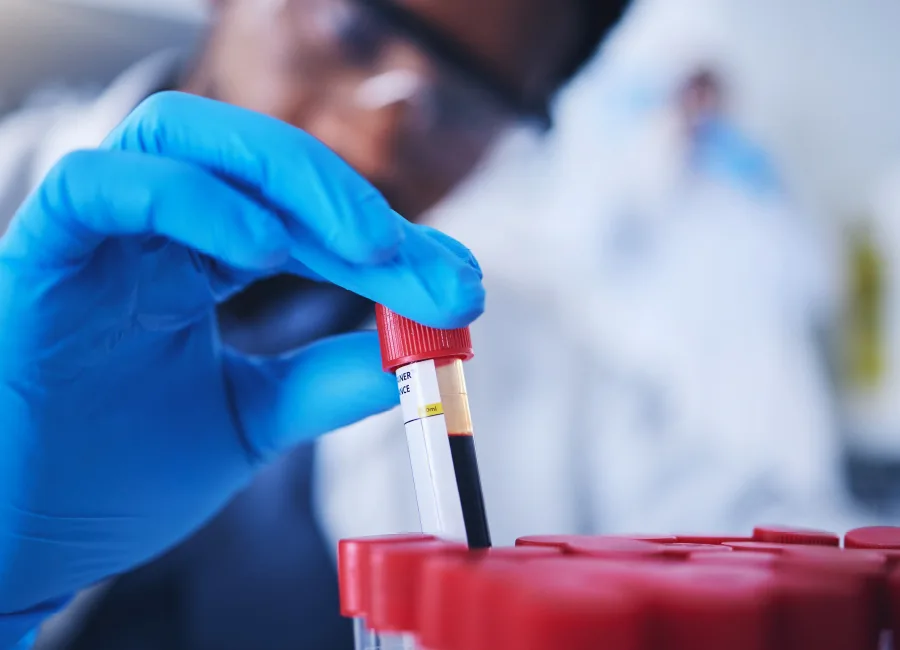
SAGA develops tests for minimal residual disease, or MRD: the small amount of cancer that can remain in the body after surgery or other treatment and that can lead to a relapse. Its lead product, Pathlight, is a blood test built around structural variants, which are large-scale rearrangements in a tumour's DNA. Most MRD tests instead follow individual mutations.
According to Clinical Lab Products, Pathlight combines whole genome sequencing with digital polymerase chain reaction (PCR) to find and then track those structural variants in a patient's blood. Foundation Medicine said the method allows very sensitive detection, so a recurrence can be spotted earlier.
The test is commercially available in the United States. It is covered by Medicare for recurrence monitoring across all subtypes of early-stage breast cancer, and Foundation Medicine said it has also shown clinical performance in colorectal cancer. SAGA also works with pharmaceutical and biotech companies on studies from early research to late-stage trials.
“MRD is one of the fastest-growing areas within diagnostics, and this technology provides us with a clinically available ultra-sensitive offering.”
Why Foundation Medicine is buying
Foundation Medicine already sells FoundationOne Monitor, a blood test that tracks circulating tumour DNA to show whether a treatment is working, and it offers a tissue-informed whole genome MRD test for research use. Pathlight adds a test that is already in clinical use and reimbursed.
"MRD is one of the fastest-growing areas within diagnostics, and this technology provides us with a clinically available ultra-sensitive offering," Dan Malarek, chief executive of Foundation Medicine, said in a statement quoted by Clinical Lab Products.
The company also plans to use Roche's AXELIOS sequencing platform and its Digital LightCycler PCR system to build a decentralised version of the MRD test that hospitals and labs outside the US could run themselves.
Roopom Banerjee, SAGA's executive chairman, said Foundation Medicine's commercial scale would help bring the platform to more patients worldwide.
From Lund to North Carolina
SAGA was spun out of Lund University in Sweden in 2016. Its co-founders were Lao Saal, then a project manager in translational oncogenomics at the university's Department of Clinical Sciences, and Anthony George, a PhD student in the same department, according to Global Venturing. Saal is now a professor at the Lund University Cancer Centre. The company has since moved its headquarters and laboratory operations to Research Triangle Park, North Carolina.
The first money came as an undisclosed angel investment from LU Innovation, the university's technology transfer office. In 2018 SAGA raised a seed round of €1 million (about $1.2 million) from LU Holding, Torna Kapital, the Gunnar Nilsson Cancer Foundation and angel investors Christer Fåhraeus and Simon Fredriksson. In August 2019 it raised $4.1 million in a round led by Hadean Ventures, with existing shareholders including Fårö Capital joining.
The largest round came in 2021, when SAGA raised SEK 106 million (about $12 million) in financing led by Sciety. Segulah Medical Acceleration was the largest single investor in that round. Sciety said the money funded the clinical validation of Pathlight, its US launch and the work that led to Medicare reimbursement.
A crowded market for cancer blood tests
Sciety described liquid biopsy, and MRD testing in particular, as one of the fastest-growing parts of precision diagnostics, driven by demand for more personalised cancer treatment and earlier intervention.
"This transaction creates the conditions for the technology to reach more patients faster," said Andreas Lindblom, managing partner at Sciety. Because part of the $595 million depends on commercial and regulatory milestones, the final amount paid to SAGA's shareholders will depend on how Pathlight performs after the deal closes.