Gallup, the research and analytics company, said on November 17, 2026 that it has completed its acquisition of TrueSpace, the creator of the Vixa score, a measure of how well a small business can withstand problems and keep performing. The price was not disclosed.
TrueSpace has been relaunched as Vixa by Gallup, a wholly owned Gallup company that began operating immediately. It has offices in Denver, Omaha and Washington, D.C. Joe Daly, Gallup's global managing partner and a member of its board of directors, is the chief executive. TrueSpace co-founder Charles Fred stays on as chief scientist.
The release did not say how many people work at TrueSpace, when exactly the company was founded or whether it had outside investors. The Vixa website now tells visitors that TrueSpace and Vixa have a new name, Vixa by Gallup.
What TrueSpace built
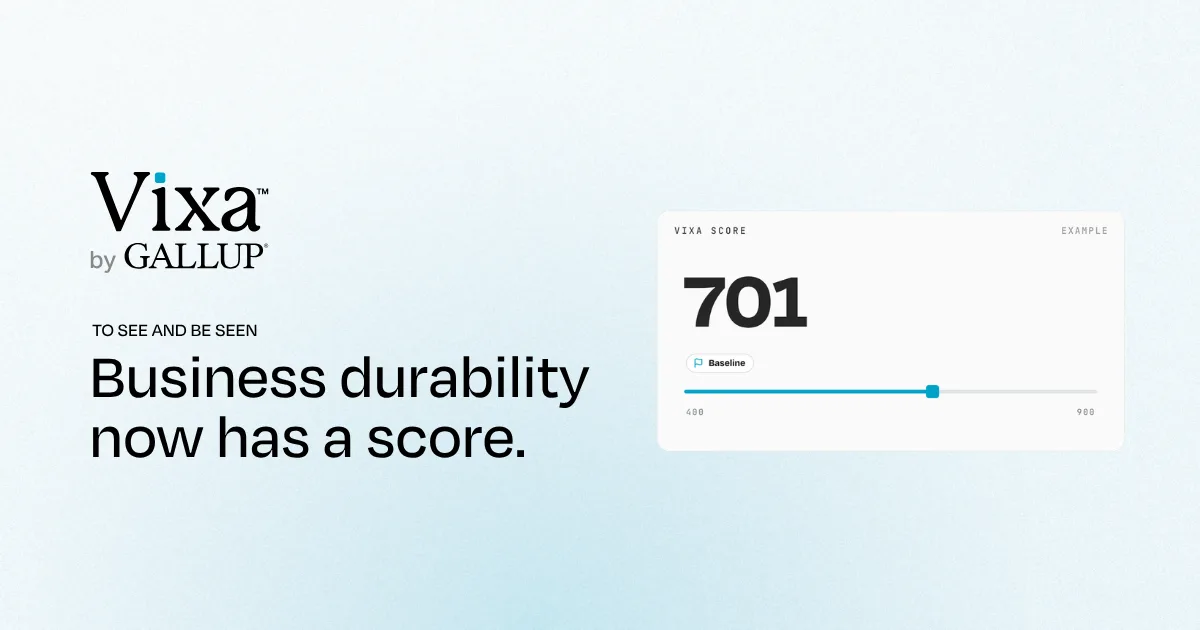
The Vixa score is a three-digit number between 400 and 900. It is meant to capture a business's durability: its ability to withstand challenges, expected or not, and sustain performance over time.
Owners can use the score to understand and show the strengths of their business. Lenders, investors and other partners get a consistent measure to look at alongside traditional financial information such as revenue, profit and credit history.
On the Vixa website, the score is built from four components: Capability, Execution, Progress and Data Confidence. Businesses complete a setup and leadership inputs, generate a score and then receive a report they can use when pursuing new opportunities. The site says score and report access follow current membership conditions.
Fred said the company had spent 14 years on one question: whether there could be a trusted score to measure the durability of a small business and widen its access to resources.
“Small business is America's most trusted institution and one of our nation's great engines of job creation. Yet some very well-run companies remain overlooked by the people who could help them grow.”
A partnership that became a purchase
Gallup and TrueSpace already worked together before the deal. Their research partnership produced the Five Conditions Assessment, which measures a business's underlying capabilities through the views of its chief executive and leadership team. That assessment now forms the Capability component of the Vixa score.
The joint work included a large study of U.S. business owners, which the Vixa website puts at nearly 2,500 respondents, alongside years of qualitative research and field testing on the conditions linked to sustained growth beyond the startup stage.
Gallup presented the purchase as an extension of its long practice of turning research into practical measures and benchmarks, such as those for employee engagement, individual strengths and wellbeing. It also said the investment reflects its commitment to entrepreneurship and good jobs, as set out in Jim Clifton's 2011 book The Coming Jobs War.
Why Gallup wants a small-business score
Daly said small business is America's most trusted institution and one of its main sources of job creation, but that some very well-run companies remain overlooked by the people who could help them grow.
The aim, he said, is to make those strengths visible through a trusted standard that gives lenders and investors more confidence to back such companies, so that the businesses can get the talent, capital and support to grow and create jobs.
Fred said that with Gallup's name and reach, the founders believe the Vixa score can become a standard that lenders, investors and partners trust. Research Live, the news site of the UK's Market Research Society, reported the deal two days later and also said the amount paid was not disclosed.
What happens next
Vixa by Gallup is taking sign-ups through vixascore.com, where businesses can start the process of getting a score. Neither company has said how many businesses have been scored so far or which lenders, if any, use the score in credit decisions.
The Vixa website describes the product as a score that small and mid-sized businesses can earn and show, and that the market can recognise and trust. It says much of what makes a business strong is hard to see from outside: financials show performance and credit shows history, but there was no common way to express durability. Whether lenders and investors adopt the score as that common measure is the test the new Gallup unit now faces.