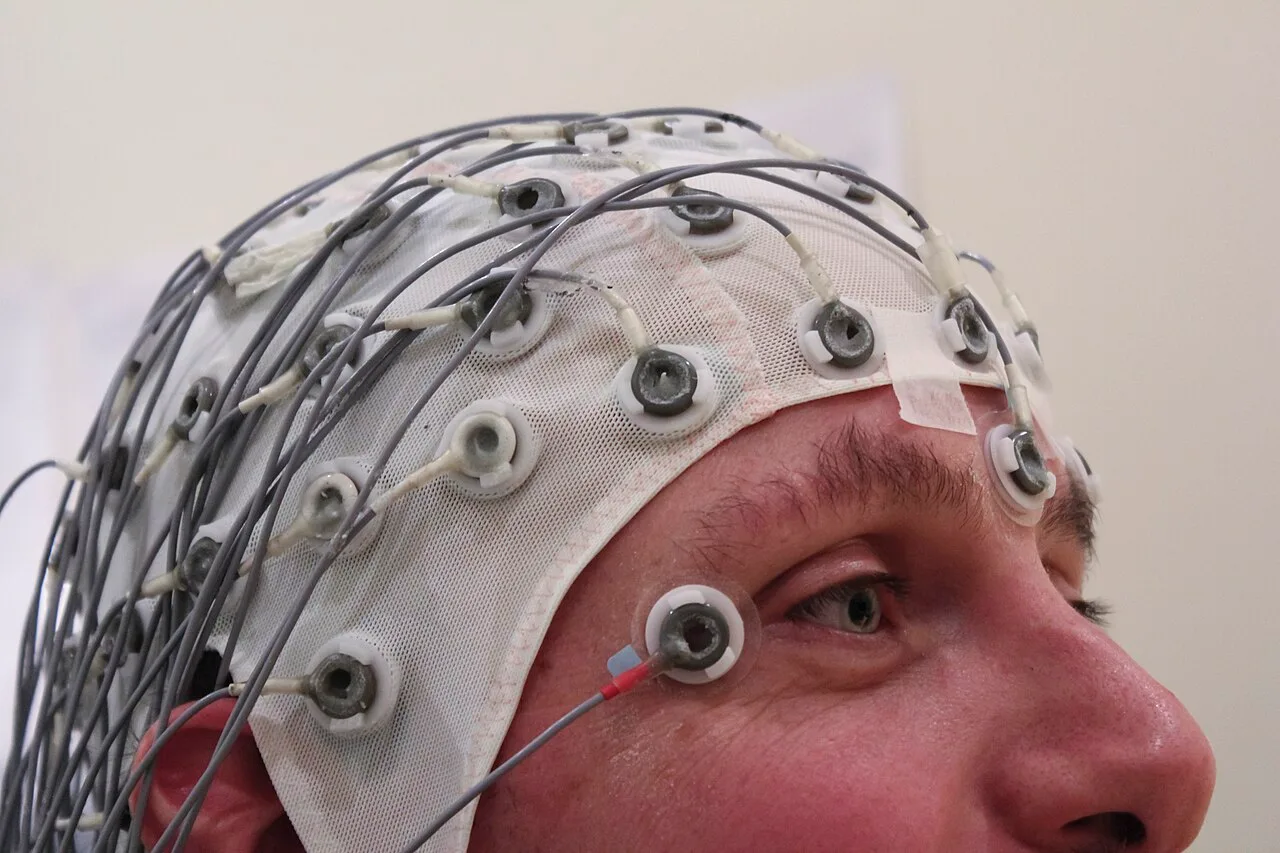
Indivi, a neurotechnology company based in Basel, Switzerland, said on November 17, 2026 that it has acquired Cogitat, a UK company spun out of Imperial College London. Cogitat builds deep-learning models that decode cognitive function from electroencephalography (EEG) brain signals. The companies did not disclose the price or other terms.
Indivi will fold Cogitat's EEG foundation model, NeuroRVQ, into its own measurement platform. It will keep working with Cogitat's AI and science team to develop the model further. The first application is detecting whether experimental Alzheimer's treatments are having an effect.
Cogitat's website now tells visitors that the company is part of Indivi. Cogitat was led by its founder and chief executive, Allan Ponniah. The announcement did not say what role he will take at Indivi or how many people work at Cogitat.
What Cogitat built
Cogitat's core product is NeuroRVQ, a model that turns raw biosignals into compact tokens so that small, efficient foundation models can be trained on them. Tech.eu reported that the company's stated goal is to do for the brain what large language models have done for language.
On top of the model, Cogitat built brainwave decoders that it says work on anyone and on any EEG headset. Its demonstrations range from reading a person's attention to letting them steer a video-game jet-ski or make an on-screen avatar copy a hand clench. The company says the decoders need no long calibration for each new user and tolerate poor contact between the skin and the sensors.
Cogitat says its machine-learning work won first place in the Benchmarks for EEG Transfer Learning (BEETL) competition at the NeurIPS AI conference. It also claims that NeuroRVQ ranks first on a five-task EEG benchmark and is in the top three of 30 models on the EEG-Arena leaderboard, while being 70 times smaller than the largest model there. These rankings come from the company and were not independently checked.
Its website lists support from UKRI, Imperial College London and start-up programmes run by AWS, Google Cloud, Microsoft and NVIDIA, and mentions a subsidiary in Greece. It does not say whether any of these organisations invested, and no funding rounds have been reported.
“Every brain is unique and speaks its own language. We’ve built an advanced AI model that works across every brain’s unique language without individual training to identify subtle changes in brain activity that have not been easily identifiable before.”
Why Indivi is buying
Indivi helps pharmaceutical and biotech companies run smaller early-stage clinical trials and detect treatment effects with more confidence. Its platform currently relies on smartphone-based tests of movement and cognition. It covers Parkinson's disease, neuromuscular conditions including facioscapulohumeral muscular dystrophy (FSHD), multiple sclerosis, and Alzheimer's disease and related dementias.
EEG gives a more direct view of brain activity than such tests and may show changes before memory and thinking problems become visible in the clinic. Indivi said NeuroRVQ keeps the fine, fast-changing detail in brain signals that most models throw away. It hopes to use that detail to pick up subtler signs of disease and of treatment response than current methods can.
Guilhem Dupont, Indivi's founder and chief executive, called the deal a new chapter for Indivi as a neuroscience-based AI company. He said the brain remains one of the hardest organs to understand and measure. In his view, Cogitat's model could first give drug developers earlier data on whether treatments work, and later shape brain-health technology outside the life sciences.
Who Indivi is
Indivi is headquartered in Basel and has offices in Córdoba, Spain, and Boston, Massachusetts. Startupticker lists the company under the legal name HEALIOS AG.
In November 2025 Indivi announced a CHF 15 million (about $19 million) investment led by Ava Investors. The money was to validate and deploy its tools in early neuroscience drug development, with a focus on Alzheimer's disease. It included funding for a proof-of-concept trial planned for 2026 that looks for functional and electrophysiological biomarkers that respond to therapies clearing beta-amyloid. Startupticker also lists an August 2026 report that the Infosys Innovation Fund became a strategic investor.
What comes next
Indivi said the combined approach could, over time, sharpen clinical trials and help effective brain-disease treatments reach the market faster. It also sees later uses in healthcare and consumer products that turn EEG data into practical information. It did not give a timeline for either.