Iris Ohyama, the Sendai-based maker of household goods and appliances, acquired shares in SEQSENSE, a Tokyo startup that builds autonomous security robots, on January 29, 2026. SEQSENSE said the Iris Group signed a share transfer agreement with its shareholders and bought the shares the same day, making SEQSENSE a company within the group.
Neither side disclosed the price, the size of the stake or which shareholders sold. The Japanese M&A outlet Nihon M&A Center and the logistics news site LogiToday both described the deal as Iris taking SEQSENSE into its group.
Soichiro Nakamura, SEQSENSE's representative director and president, stays in his role and will keep running the business as before, the startup said.
What SEQSENSE built
SEQSENSE was established on October 3, 2016, and is based in Chuo-ku, Tokyo. It grew out of research by Yoji Kuroda, a professor in Meiji University's School of Science and Technology who had spent more than 20 years developing field robots, including work linked to JAXA's Hayabusa asteroid mission, according to a 2023 announcement by investor Fujita Innovation Capital.
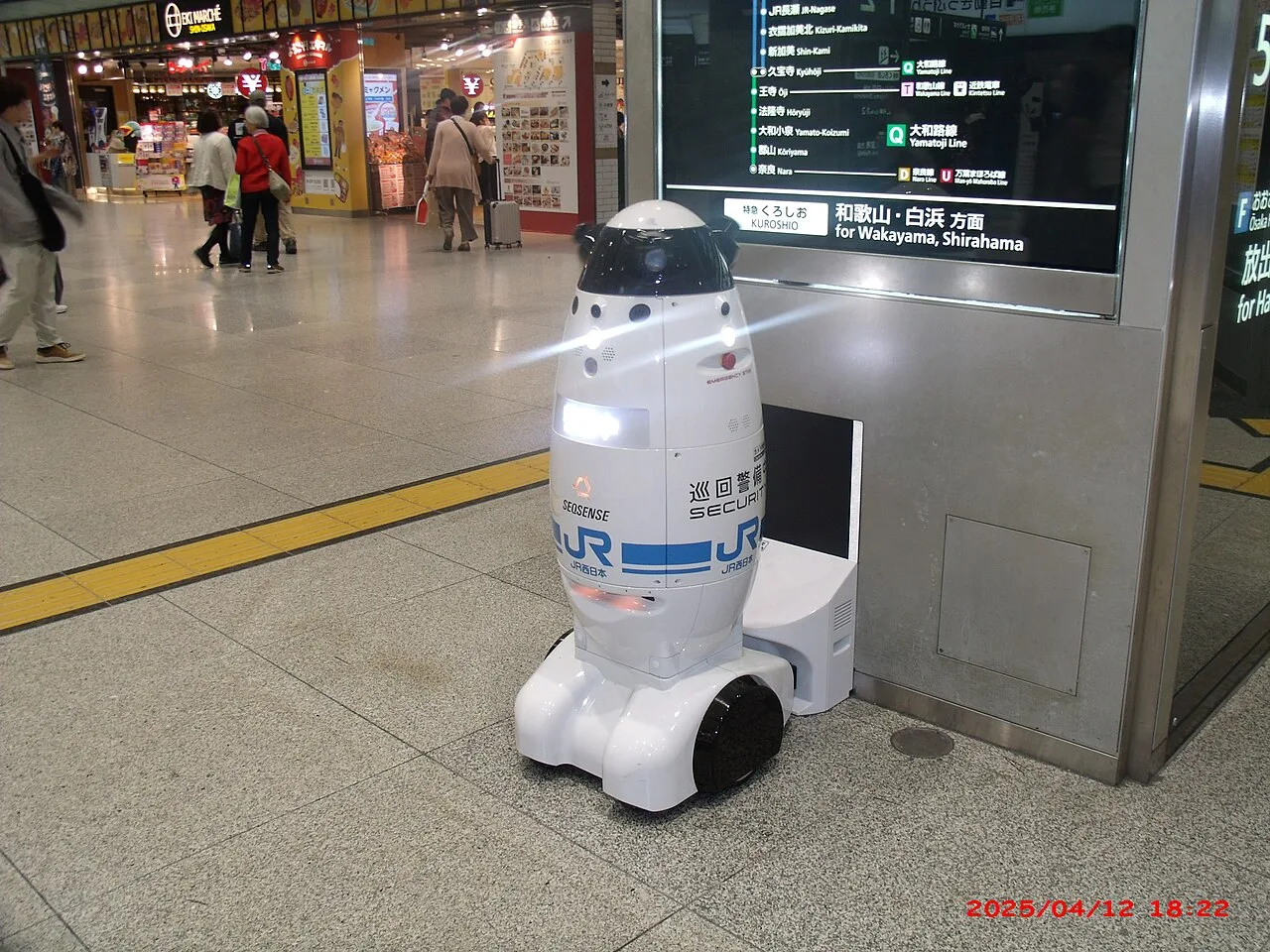
Its main product is SQ-2, a robot that patrols buildings on its own. Using SEQSENSE's own 3D sensors, the robot maps a facility, detects moving objects and notices changes in its surroundings, and it connects to the cloud so that staff in a security control room can operate it remotely, LogiToday reported. Iris said SQ-2 robots are already used in government offices, public facilities, large airports and shopping centres.
SEQSENSE has kept adding sites in the months around the deal. Its news page lists a trial at Shibuya PARCO that began days before the acquisition, and later deployments including an annex of the Ministry of Economy, Trade and Industry. The company also co-developed FORRO, an indoor delivery robot for hospitals, with Kawasaki Heavy Industries.
Why Iris is buying
Iris entered robotics in 2020 and says its cleaning robots have been installed at more than 7,000 companies. In 2025 it showed JILBY, a cleaning robot built with its own software and hardware. Iris described security robots as a second pillar for the robotics business, after cleaning, and the deal marks its full entry into that market, according to LogiToday.
The plan is to pair SEQSENSE's engineering with Iris's mass production, purchasing and nationwide sales network. As a first step, Iris intends to sell SQ-2 through its own sales channels across Japan. It also plans to update the product using its manufacturing know-how, lower costs and develop new security robots based on what customers ask for.
Iris pointed to a chronic shortage of workers in Japan's security industry as the market need. SEQSENSE says it had the largest manufacturer share of Japan's security robot market in 2024, a claim Iris repeated with caveats about how the figure was measured.
The founders and the funding
SEQSENSE raised ¥200 million (about $1.8 million) in seed funding in 2017 and ¥1 billion (about $9 million) in a Series A round in 2018, according to a profile published by NEDO, Japan's state technology development agency, which selected the startup for one of its support programmes in 2017. The company began selling its security robot business commercially in 2019.
In August 2023 SEQSENSE announced a Series B round of ¥1.79 billion (about $12.6 million), the startup news site Sogyo Techo reported. That month the Fujita TT Impact Fund No. 1, run by Fujita Innovation Capital, a subsidiary of the Fujita Health University group, together with Tokai Tokyo Investment, said it had bought newly issued SEQSENSE shares.
No other investors were named in the sources reviewed for this article, and neither company said what return the earlier backers received.
Robots for a shrinking workforce
Japan's working-age population is falling, and security is one of the industries where the gap is widest, Fujita Innovation Capital wrote when it invested. Robots such as SQ-2 are meant to take over some patrol rounds or share them with human guards.
For Iris, the deal adds a robot sold to the operators of offices, airports and commercial buildings to a robotics line that so far has centred on cleaning. For SEQSENSE, it brings a parent with mass-production capacity and a national sales network behind SQ-2, which Iris plans to use to widen the robot's reach.