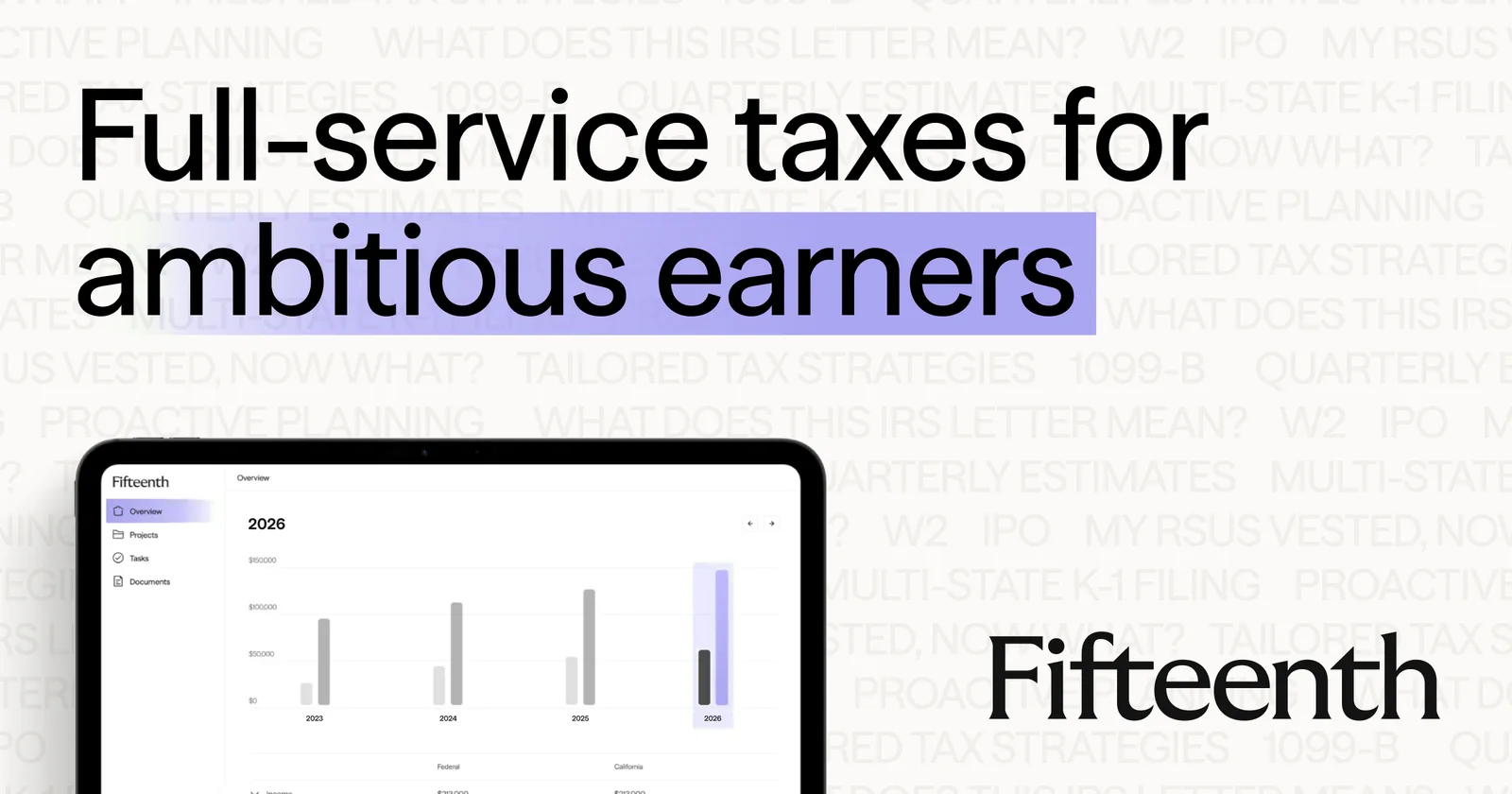
Mercer Advisors, a Denver-based wealth management firm with about $114 billion in client assets, has acquired Fifteenth, a startup that combines its own software with a team of accountants to handle complicated tax returns for technology workers. Mercer announced the deal on November 5, 2026.
Terms were not disclosed. Fifteenth's co-founders, chief executive Ankur Dahiya and chief tax officer Laura Moreno, are joining Mercer, along with Fifteenth's tax professionals and the technologists who built its platform. Fifteenth's website now says the company is part of Mercer Advisors and presents its services under the name Fifteenth by Mercer Advisors.
What Fifteenth built
Fifteenth describes itself as an AI-native tax and accounting firm. It specialises in the tax problems that come with equity compensation: exercising stock options, selling shares in tender offers, cashing out in a liquidity event and filing for several entities at once. Rather than only preparing a return each spring, it pairs annual preparation with planning through the year.
Most of its clients are employees of Silicon Valley technology companies whose wealth is tied up in company stock, according to InvestmentNews. Dahiya said Fifteenth's tools already serve more than 1,000 professionals. When the company raised its seed round in 2025, Pulse 2.0 reported that it offered quarterly planning, an AI-powered document vault and connections to Workday, Rippling, Robinhood and Carta, with prices starting at $1,000 a year.
Mercer said Fifteenth's tax staff came from Big Four and other large accounting firms. Its website lists Moreno and six tax advisers and analysts with backgrounds at firms including PwC, RSM, Deloitte and Carta.
“What sets Fifteenth apart is that their AI capabilities aren’t theoretical.”
Why Mercer is buying
Mercer has been adding tax services for years. Its earlier tax acquisitions, including Beach Freeman Lim & Cleland in Southern California and Glass Jacobson, were established accounting practices, InvestmentNews reported. Fifteenth is different: a technology company first, with a platform that Mercer says can process complex returns faster and at larger scale than a model that depends on adding staff.
Tax professionals make up about one in 10 of Mercer's roughly 1,880 employees, and the firm expects that to reach one in eight by the end of 2026. Mercer said more than half of the very wealthy clients joining it want tax services as part of the package.
The deal also gives Mercer a way to meet clients earlier. Fifteenth's customers are often people heading towards a sale, an IPO or another liquidity event, and Mercer said it expects to start working with them before that money arrives. Fifteenth's accountants and software will also support a group of Mercer's existing tax clients with similar needs.
Cynthia Loh, Mercer's chief platform officer, said Fifteenth's tools had been refined across thousands of returns. Daniel Gourvitch, Mercer's president, said the firm's partnership strategy was ultimately about building a better experience for clients.
The founders and the funding
Dahiya is a second-time founder: his previous startup, RunX, was acquired by Rippling, Pulse 2.0 reported. Moreno worked at PwC, a family office and Carta before co-founding Fifteenth.
Fifteenth raised an $8.25 million seed round in February 2025, led by A* and General Catalyst, with SV Angel and angel investors including Swapnil Jain of Observe.AI, Ryan Eisenman of Arch and Akash Garg joining. No later funding has been reported. Neither company disclosed Fifteenth's founding date, revenue or headcount.
Mercer's wider push into technology
Mercer has more than 120 locations and is majority-owned by Oak Hill Capital, Genstar Capital, Altas Partners and GIC. It reached 100 acquisitions in May 2025 and released the second version of Aspen, its AI-enabled advisory platform, in the summer of 2026.
Two days before the Fifteenth deal, on November 3, it announced a multi-year partnership with Arch to automate data work on private market investments. Buying Fifteenth goes a step further, bringing the software and the people who build it inside the firm.