Schrödinger, the Nasdaq-listed company that sells computational drug discovery software, has acquired ENPICOM, a privately held bioinformatics and AI company based in 's-Hertogenbosch in the Netherlands. Schrödinger announced the deal on November 25, 2026, and said it had already closed.
The company paid approximately €22 million (about $25.5 million) in cash. Healthcare deal newsletter Investors in Healthcare put the price at about $24 million in its own conversion. Schrödinger said it does not expect the purchase to have a material effect on its annual contract value for 2026, and it reaffirmed the ACV guidance it gave on November 4.
ENPICOM's founder and chief executive, Nicola Bonzanni, is staying with the business, and Schrödinger said its commercial team would take ENPICOM's platform to a wider set of customers. The company did not say how many ENPICOM employees are joining.
What ENPICOM built
ENPICOM makes software for the earliest stage of biologics discovery, the work of finding antibody and other protein drug candidates. Modern screening campaigns generate enormous volumes of DNA sequencing data, and much of a scientist's time goes into processing and interpreting it.
According to the announcement, ENPICOM's platform automates the sequencing pipelines and then applies sequence analytics and machine learning to narrow billions of possibilities down to a ranked shortlist of candidates. Schrödinger said this takes hours rather than the weeks the work can otherwise require. The platform also pulls the resulting data into one place and builds AI tools into the scientists' everyday workflow.
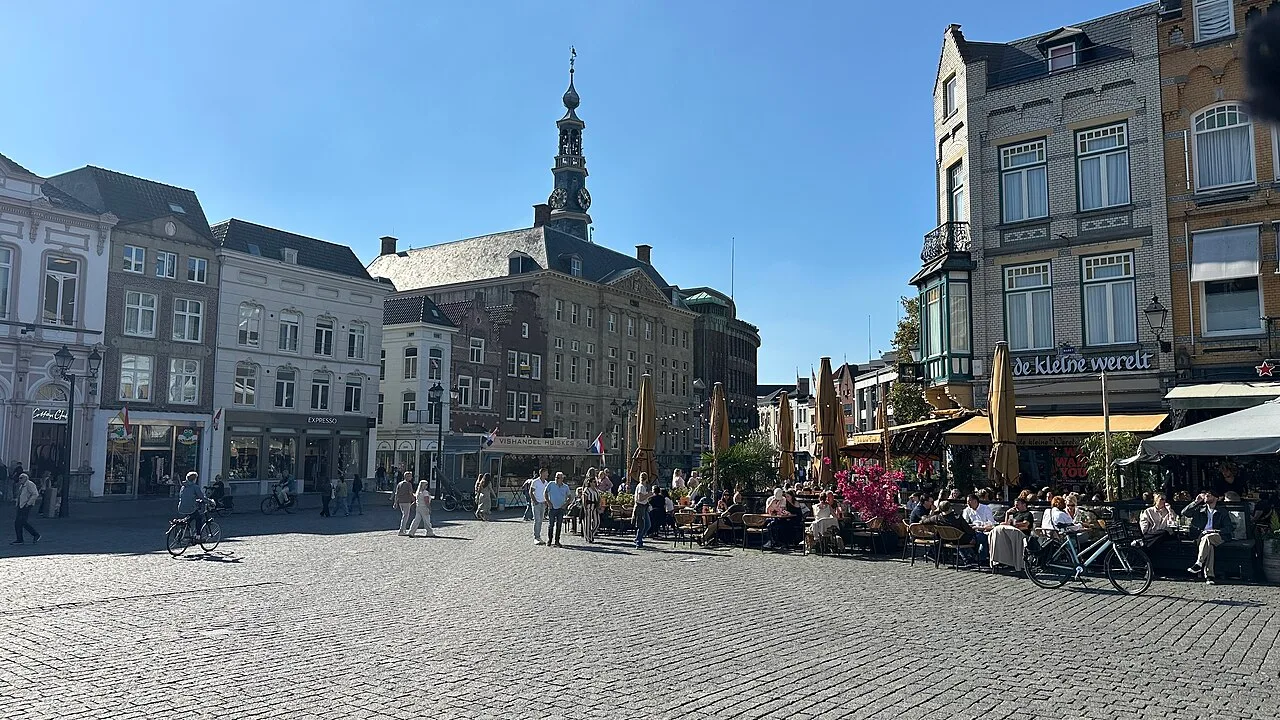
The company is based on the Mariënburg Campus in 's-Hertogenbosch, which it shares with the Jheronimus Academy of Data Science (JADS).
“Our bioinformatics platform turns weeks of complex sequence analysis into hours of decisive insight”
Why Schrödinger is buying
Schrödinger's chief executive, Ramy Farid, described the company as already leading in computational design of small-molecule drugs, and biologics are the area it now wants to extend into. Its LiveDesign for Biologics software is meant to help teams design and optimise protein drugs.
The plan is to connect the two ends of the process. Candidates that come out of ENPICOM's screening analysis would be fed directly into LiveDesign for Biologics and into Schrödinger's physics-based optimisation tools. Schrödinger described the combination as an end-to-end computational platform for biologics discovery.
"ENPICOM's innovative solutions are a strategic addition to our computational platform," said Ramy Farid, Schrödinger's chief executive. He said the combined tools would "support biologics discovery campaigns from initial screening through atomic-scale optimization."
Bonzanni framed the deal around speed. "Our bioinformatics platform turns weeks of complex sequence analysis into hours of decisive insight," he said, adding that working with Schrödinger's scientific team would help develop the technology further.
The founders and the funding
Schrödinger's announcement names Bonzanni as ENPICOM's founder. It does not give a founding date, a headcount or revenue figures for the Dutch company.
ENPICOM's early backers were BOP Capital, BOM Brabant Ventures, Nextgen Ventures and Arches Capital, according to Investors in Healthcare. The amounts these investors put in were not reported, and neither the buyer nor the sellers disclosed how the €22 million was split among shareholders. ENPICOM's total funding has not been made public.
What happens next
Because the deal has already closed, ENPICOM is now part of Schrödinger. The company did not say whether ENPICOM's software will keep its own brand, whether it will still be sold as a separate product, or how quickly it will be built into LiveDesign for Biologics.
Schrödinger's own guidance shows the scale of the bet: it expects no material change to its annual contract value this year from the purchase. The aim is longer term. By tying early screening analysis to its existing design tools, Schrödinger wants to offer pharmaceutical and biotech customers a single computational path from the first sequencing run to an optimised drug candidate, rather than a set of separate products for each step.
Schrödinger did not say whether it plans further acquisitions in biologics, or whether ENPICOM's founder will take on a wider role in the group. The terms of any retention arrangements for ENPICOM staff were not disclosed.