Kortext, a UK company that sells digital learning content and software to universities, acquired StudyStash, an AI study platform, Tech.eu reported on October 2, 2026. The companies did not disclose the price or other terms.
StudyStash will continue as a separate brand inside Kortext. Its co-founders, Ben Ward and Jonathan Graham, keep their roles as chief executive and chief technology officer.
The two founders are relocating to Silicon Valley because about half of StudyStash's customers are in the United States. The sale came roughly a year after they graduated from the University of Birmingham.
What StudyStash built
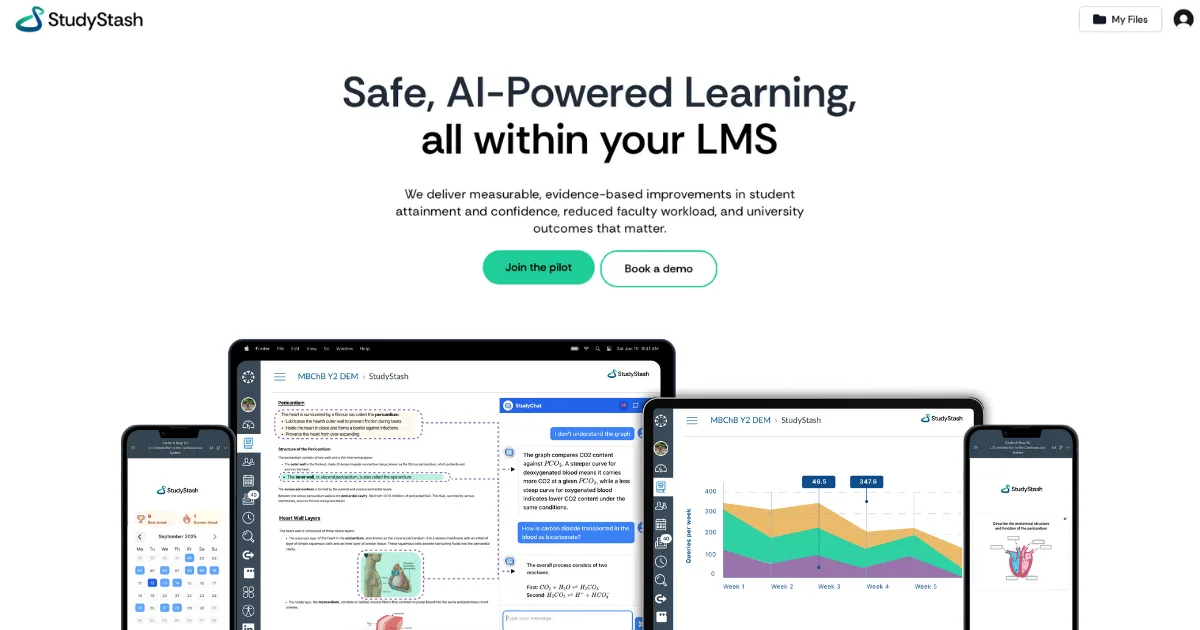
StudyStash takes the material from a university course and turns it into personalised flashcards, practice tests and podcasts. The software adjusts to the topics each student finds hardest, and it gives lecturers and student success teams a view of where students may need help. It connects to the Canvas, Blackboard and Moodle learning management systems.
According to the company, tens of thousands of students use StudyStash at more than 160 institutions in the UK, Europe, the US and Africa. Named users include California State University, Minnesota State, Colorado State University, the University of Oulu and RCSI. StudyStash also works with the California community college system and with EAB, a consultancy that serves more than 2,800 higher education institutions.
EdTech Innovation Hub reported that StudyStash claims a zero dropout rate among its users at an unnamed university in Washington state, against 16% for students who did not use it. The company did not publish how it measured this, and the figure has not been independently checked.
“Universities set a high bar, and we built StudyStash to meet it from day one.”
The founders and the funding
Ward and Graham met while studying computer science at Birmingham and working at PwC through the firm's technology degree apprenticeship. EdTech Innovation Hub gave their ages as 23 and 24. They first built StudyStash to turn their own course notes into revision material, then developed it into a business through the university's Elevate incubator. The University of Birmingham became the first paying customer.
The company has an advisory board that includes senior figures from UCL, Imperial College London and the University of Oxford. Ward told Tech.eu that StudyStash had raised equity finance since launch, but neither the amounts nor the investors were disclosed. He said that since launch the company had scaled to more than 160 institutions on three continents.
Ward said the founders had shown they could build, sell and scale the product, and that Kortext would give them the reach to take it further. Graham said universities set high standards and that StudyStash was designed to meet them from the start.
Why Kortext is buying
Kortext was founded in 2013 and is led by its founder and chief executive, James Gray. It sells digital course content, analytics and AI-based workflow tools for teaching, learning and student engagement. EdTech Innovation Hub reported that its network covers more than 1,000 universities.
Gray said StudyStash's capabilities complement Kortext's existing strengths and speed up its AI strategy. He added that the combined company would help institutions adopt AI responsibly and support teaching staff more effectively.
For StudyStash, the deal mainly brings distribution. Tech.eu reported that the purchase gives the startup more reach, particularly in the US, while Kortext adds AI study tools to its range of products.
A fast exit for a student project
StudyStash went from a tool two students built for themselves to an acquisition in about a year after graduation, a short path for a company selling to universities, where buying decisions often take a long time.
Kortext did not say how StudyStash's product will be combined with its own platform or whether the startup's team will grow after the move to the US.
The move to California will put the founders closer to the US customers that now make up about half of the business, including California State University and the state's community college system. Kortext, which Tech.eu said works with thousands of universities worldwide, gives them a larger sales network to draw on.