Mistral AI, the French developer of large language models, agreed to acquire Koyeb, a Paris startup that runs a serverless platform for deploying AI applications, the companies said on 17 February 2026. It is Mistral's first acquisition.
Financial terms were not disclosed. Koyeb said the deal was a definitive agreement and that completion was subject to closing conditions.
Koyeb's 13 employees and its three co-founders, Yann Léger, Edouard Bonlieu and Bastien Chatelard, will join Mistral's engineering team under co-founder and chief technology officer Timothée Lacroix, TechCrunch reported. Koyeb's platform will keep running and is expected to become a core component of Mistral Compute, Mistral's AI cloud offering, over the coming months.
What Koyeb built
Koyeb was founded in 2020 by three former employees of Scaleway, the French cloud provider. Its founders said they had spent 10 years building and running large cloud platforms together before starting the company.
The company offers serverless infrastructure, meaning developers can deploy code without managing servers. Its platform runs workloads on CPUs, GPUs and specialised accelerators, with features such as autoscaling, scaling to zero when an application is idle, and sandboxes for AI agents. It recently launched Koyeb Sandboxes, isolated environments for running AI agents.
Koyeb says it runs tens of thousands of applications on bare-metal servers in 10 locations around the world. Before the deal its customers could already use the platform to deploy models from Mistral and other providers.
“Koyeb’s product and expertise will accelerate our development on the Compute front, and contribute to building a true AI cloud.”
Why Mistral is buying
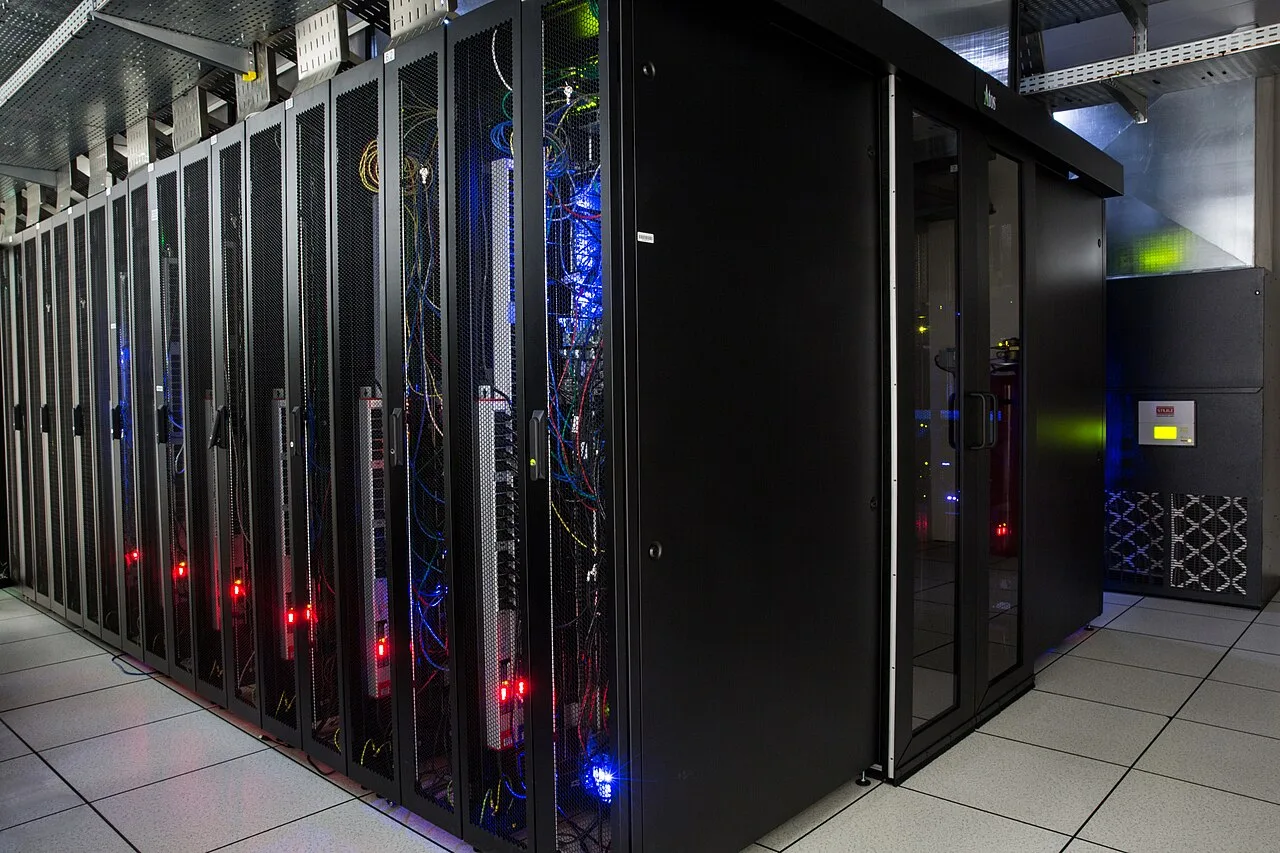
Mistral is best known for its models, but it announced Mistral Compute in June 2025 to sell the same infrastructure it uses to build and run its own models to other companies. According to Koyeb, Mistral is starting with 40 megawatts of data centre capacity and 18,000 Nvidia Blackwell GPUs, and has announced a $1.4 billion data centre investment in Sweden.
According to Mistral's announcement, as reported by TechCrunch, Koyeb's team and technology will help it deploy models on customers' own hardware, make better use of its GPUs and scale inference, the work of running trained models to answer requests.
Lacroix said Koyeb would speed up Mistral's work on Compute and help it build a full AI cloud. Mistral, which TechCrunch reported was last valued at $13.8 billion, recently passed $400 million in annual recurring revenue.
Mistral has not said whether more acquisitions will follow. Speaking at the Techarena conference in Stockholm the week before the deal, chief executive Arthur Mensch said the company was hiring for infrastructure and other roles, CXO Digitalpulse reported.
The founders and the funding
Koyeb raised $8.6 million before the sale, TechCrunch reported. That included a $1.6 million pre-seed round in 2020 and a $7 million seed round in 2023 led by Serena, a Paris venture capital firm.
Floriane de Maupeou, a principal at Serena, told TechCrunch that the combination would play a key role in building the foundations of sovereign AI infrastructure in Europe.
In their announcement, Koyeb's founders said they had met Lacroix and the Mistral team and found they shared the goal of building world-class infrastructure for AI, and that the deal was a chance to speed up the build-out of AI infrastructure in Europe.
What happens to customers
Koyeb said its service would continue without disruption and that customers can keep using the same support channels and billing. Customer data will not be moved to Mistral for now, and users do not need a Mistral account.
Inside Mistral, Koyeb plans to concentrate on inference, sandboxes and serverless hosting for MCP servers, the connectors that let AI models use outside tools and data.
The company is focusing on larger customers as it moves into Mistral. Its entry-level Starter plan will be removed, and new users will have to sign up for the Pro, Scale or Enterprise plans. Existing organisations on current plans will not see changes, Koyeb said.