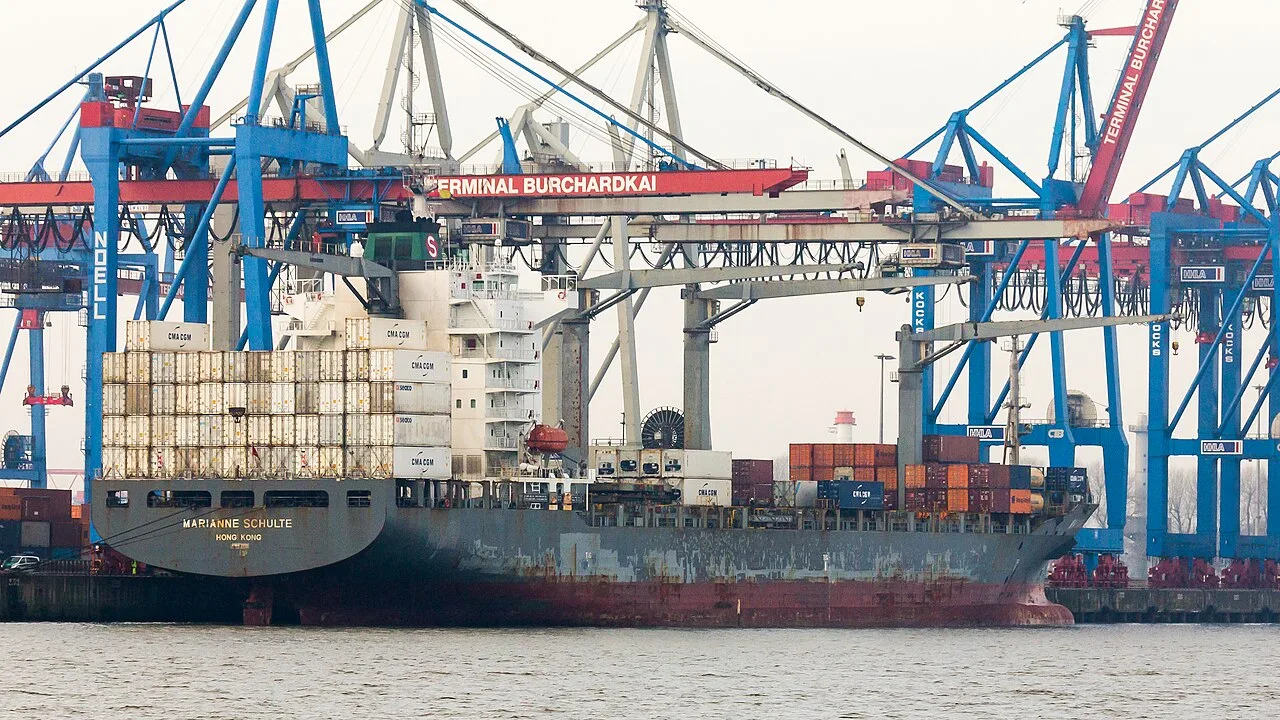
StormGeo, the Alfa Laval business that sells weather intelligence, voyage optimisation and fleet performance tools to shipping companies, has acquired Portchain, a Copenhagen software startup that helps container lines and terminals plan port calls together. The deal closed on October 30, 2026, according to StormGeo's announcement, which was published that day by trade outlets including Smart Maritime Network and Maritime Professional.
The companies did not disclose the price or other financial terms. They also did not say how many people work at Portchain.
Portchain will run as an independent company under StormGeo for the next few years before it is folded fully into StormGeo's product range, the announcement said. Existing customers should see no change to their service, and the combined offering will be sold through StormGeo.
What Portchain built
Portchain's software lets carriers and terminals share operational data in one place rather than coordinating by spreadsheet, email and phone. Its Portchain Connect product is used to align vessel schedules and cargo volumes between lines and terminals. Portchain Quay handles berth, crane and workforce planning inside the terminal, in a shared view that updates in real time.
According to StormGeo, the Portchain network now connects shipping lines with more than 200 terminals, which together account for more than 40% of global container terminal capacity. In early 2024, when it last raised money, the startup counted about 100 terminals and a fifth of world capacity in its network, Tech.eu reported at the time. Hapag-Lloyd had by then signed a five-year agreement to roll out Portchain Connect across its network.
“Joining StormGeo gives us the opportunity to bring voyage optimization and port call coordination closer together, helping customers get more value from the decisions they already make.”
The founders and the funding
Portchain was founded in 2017 by Niels Kristiansen, its chief executive, together with Anders Olivarius and Thor Thorup. All three were project managers at McKinsey, where they advised container terminals, carriers and logistics groups on digital projects. Kristiansen studied economics at the universities of Gothenburg and Oxford and holds an MBA from MIT.
The company's early funding came largely from public sources, including the Danish Maritime Fund, the Innovation Fund and the European Union's Horizon 2020 programme. In July 2019 it raised €2.5 million (about $2.8 million) from Danish angel investors, Nordic9 reported. In February 2024 it raised $5 million in a round led by London-based Angular Ventures, with participation from MX Ventures and angel investors from the shipping industry. Tech.eu said that took its total funding to $10 million. Nordic9's database puts total investment slightly higher, at about $11 million.
Why StormGeo is buying
StormGeo's Voyage Intelligence product combines route optimisation, vessel performance data and guidance from its routing experts, so operators can plan for a target arrival time, lower fuel use or a balance of both. What it lacked was a live view of when a terminal will actually be ready to take a ship. Portchain supplies berth plans that are agreed with terminal operators and tied to their crane and labour plans.
The companies plan to link the two. If a terminal's expected berthing time changes, that information could feed into speed decisions while the vessel is still at sea, so its estimated time of arrival lines up with its estimated time of berthing. Terminals would in turn get better arrival data to plan berths, cranes and crews. StormGeo described this as the basis for just-in-time voyage optimisation at scale, with the goal of cutting time spent waiting at anchor, fuel burn and emissions.
"Joining StormGeo gives us the opportunity to bring voyage optimization and port call coordination closer together, helping customers get more value from the decisions they already make," said Kristiansen. Kim Hedegaard Sørensen, president of the StormGeo business unit, said that combining weather and voyage insights with current port and terminal information would help customers improve efficiency from sea to port and move toward their environmental targets.
Alfa Laval's digital push
StormGeo serves as Alfa Laval's digital arm in the marine market. Alfa Laval said the purchase strengthens its offering for the fuel transition and energy efficiency by adding routing and port call coordination expertise to its marine equipment portfolio.
Shipping companies face pressure to cut fuel use and emissions, and arriving early only to wait outside a port wastes both. Portchain's founders started the company because carriers and terminals were still aligning their plans through spreadsheets, emails and phone calls. StormGeo is betting that owning the berth-side data, rather than only the weather and routing side, will let it close that gap for its customers.