Stripe said on September 30, 2026, that it had agreed to acquire Parafin, a San Francisco company that supplies small-business credit through large software platforms such as DoorDash, Gusto, Jobber and Mindbody. The payments company announced the deal from its two bases in San Francisco and Dublin.
Neither side disclosed the price. A Stripe spokesperson declined to comment on what it paid, according to Payments Dive. The transaction is expected to close in the coming months, subject to customary conditions that include any required regulatory clearances.
Stripe said Parafin would expand the range of credit it can offer through platforms, alongside its existing Stripe Capital product. Parafin's co-founders, chief executive Sahill Poddar and Vineet Goel, were singled out by Stripe as bringing experience in credit, risk and embedded financial products.
What Parafin built
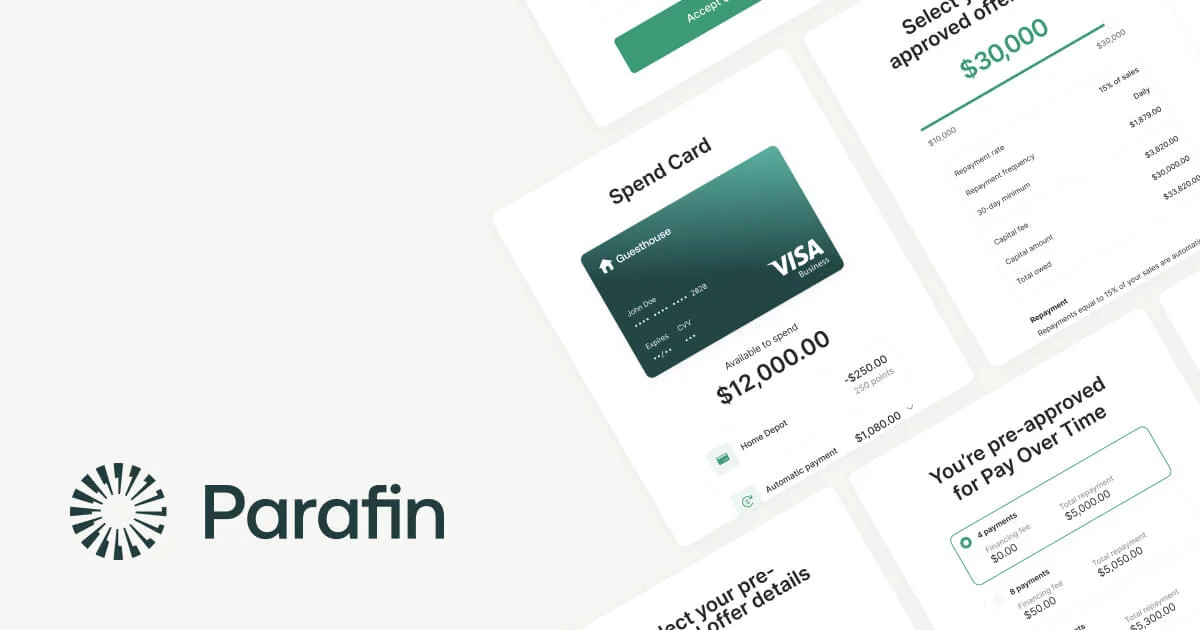
Parafin, founded in 2020, does not lend to merchants directly under its own brand. Instead it builds credit offers that platforms present to the small businesses already using their software. Payments Dive reported that the company made its first cash advance in 2021, works with Cross River Bank and integrates with software partners including Gusto, SpotOn and DoorDash.
Stripe said Parafin has helped more than 60,000 businesses get access to capital since 2020. Payments Dive put the total credit extended at about $3 billion across the United States and Canada and reported that the company had an annual revenue run rate of $100 million as of December 2025, based on its own internal figures.
Besides its core capital product, Parafin sells two other credit products: Pay Over Time, which lets businesses spread repayments, and Spend, aimed at managing cash flow. In a public letter cited by Payments Dive, the co-founders argued that banks assess small businesses with processes built for large companies and often rely on personal credit scores.
“We started Parafin to give small businesses access to the modern credit products that were only available to large companies. Stripe's financial infrastructure and global reach will help us move faster and serve millions more businesses through the platforms they rely on.”
Why Stripe is buying
More than 18,000 platforms build on Stripe, and the company said they increasingly act as the main financial relationship for the small businesses they serve. Stripe said demand for Stripe Capital had risen as more businesses were formed while traditional financing stayed tight.
The company backed that case with its own numbers. New businesses launching on Stripe rose 86% year over year in the second quarter of 2026, it said, while only 41% of US small-business loan applications were approved last year, 18% fewer than in 2015. Stripe also cited a study finding that businesses which accepted Stripe Capital offers grew 27 percentage points faster than those that did not.
The deal is Stripe's second acquisition in about two months. Payments Dive noted that in August Stripe bought AI services company OpenRouter, reportedly for about $7.5 billion according to The New York Times, and that Stripe's management valued the company at about $160 billion in February for employee and shareholder share sales.
The founders and the funding
Parafin raised a $100 million Series C in December 2024 at a $750 million valuation. Notable Capital led that round, with Redpoint Ventures joining and existing investors Ribbit Capital, Thrive Capital and GIC also taking part, according to Finance Director Europe.
Before that, Parafin raised a $60 million Series B in September 2022 led by GIC, bringing its equity funding to $94 million at the time. Payments Dive, citing Crunchbase, reported that the company has raised about $200 million in equity over its six-year life.
The $750 million figure is Parafin's last private valuation, not the acquisition price. No valuation tied to the Stripe deal has been reported.
What happens to platforms and borrowers
Stripe did not say whether the Parafin brand will continue or how its platform partners will be moved onto Stripe's systems. It said only that the combined business would offer a wider range of credit products to a larger set of platforms.
Poddar said Parafin was started to give small businesses access to credit products that had previously been available only to large companies, and that Stripe's infrastructure and global reach would let it reach millions more businesses through the platforms they already use.